The
portfolio.
05 tools — 2 reporting, 3 operational
Horizon Planner
A multi-user product roadmap built around Now / Next / Later sprint groups. Dynamic grouping, drag-and-drop reordering, job stories, and real-time sync via Supabase.
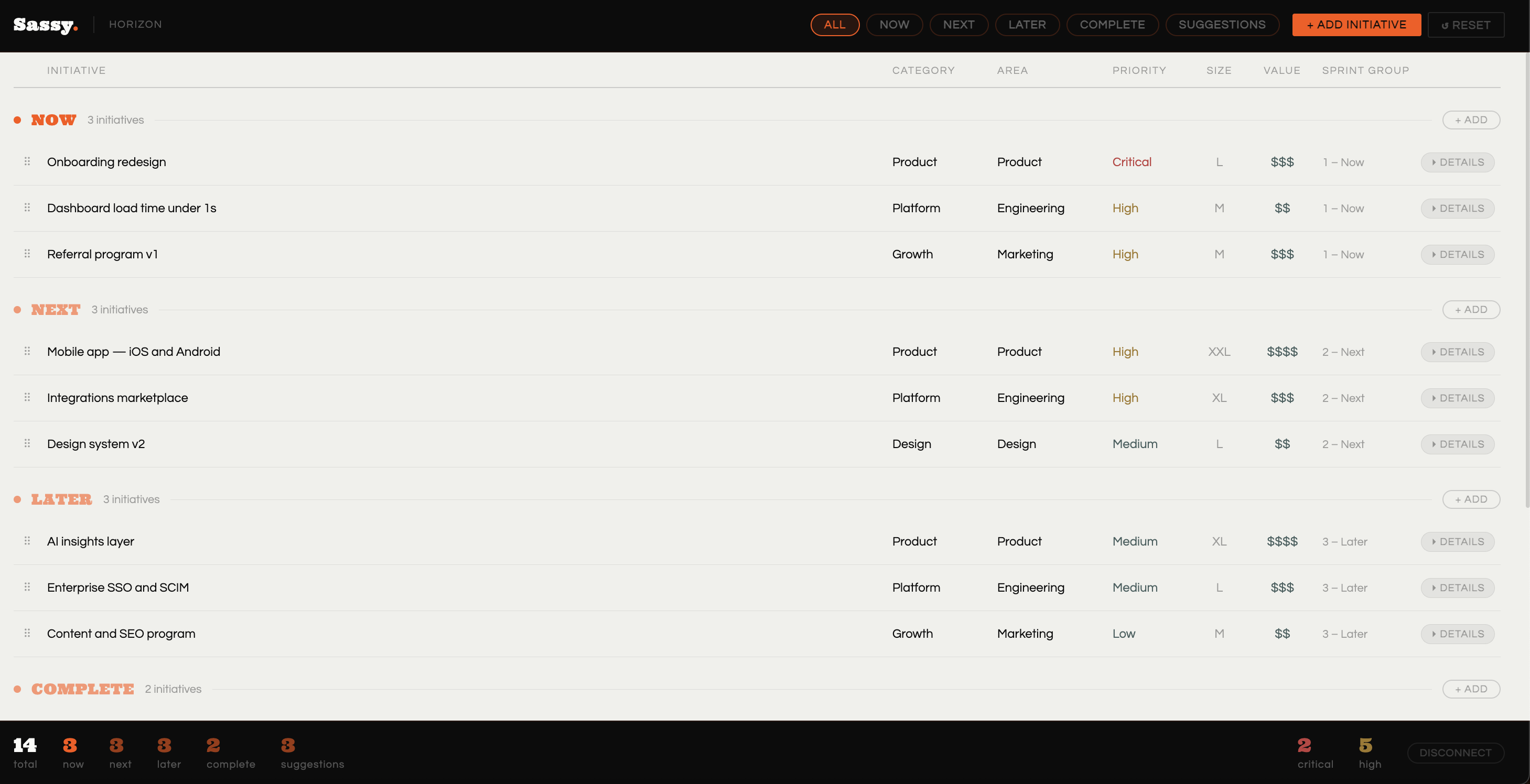
Product teams were managing roadmaps in spreadsheets that couldn't group dynamically, show priority at a glance, or capture the thinking behind each initiative.
- What are we working on right now vs. later?
- Why does each initiative matter?
- What's the scope and what does success look like?
- How do we capture ideas without losing them?
- Can the whole team see the same picture?
Launch Tracker
A multi stage launch readiness tracker built for program rollouts. Five-stage task status, owner assignment, readiness status, view across multiple launches, and live progress reporting.
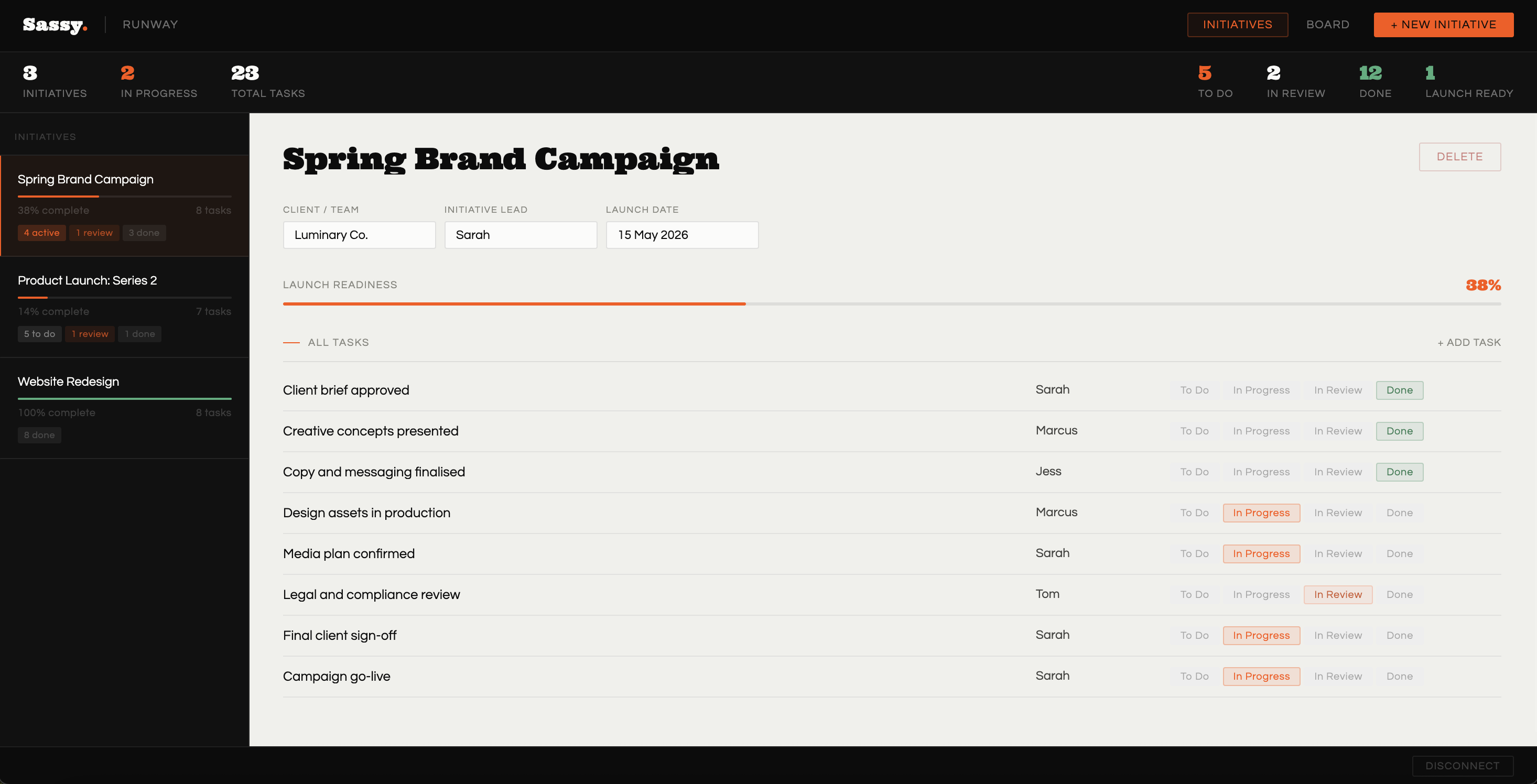
Launching anything across multiple workstreams meant status lived in Slack threads, emails, and memory — no single place showed readiness across every moving part.
- What needs to get done?
- Who's working on what?
- Where's everything at?
- What still needs to be done?
- Are we ready to launch?
Onboarding Journey Map
A stage-by-stage map of the onboarding path from recruitment to activation and use — every touchpoint, every message, every owner visible in one place. The thinking behind this became Wayfinder — the generic version.
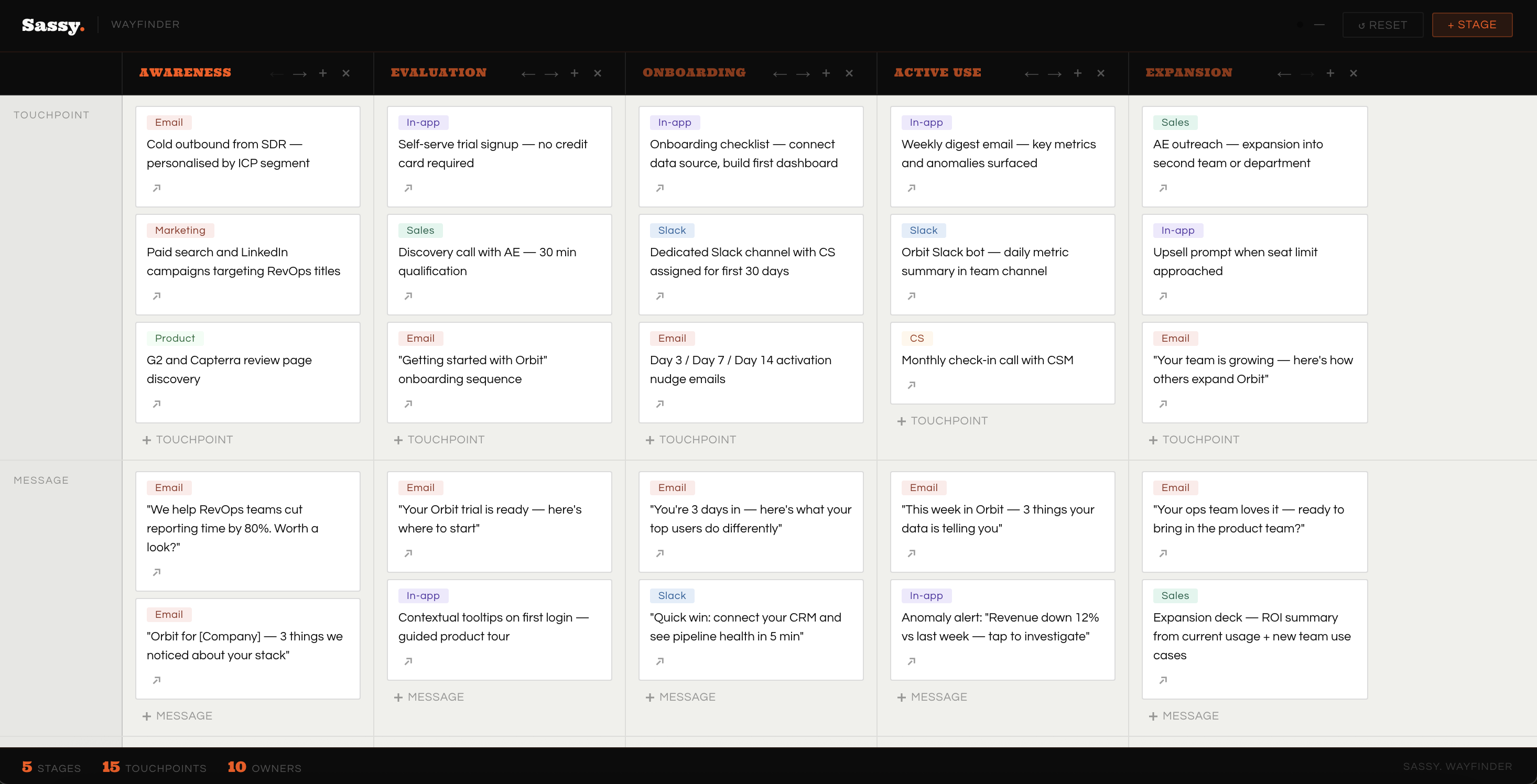
Patient journeys span multiple stages, channels, and owners — but no single view existed to see the full path, making it impossible to know where patients were dropping off or what was missing.
- What stages does a patient move through?
- What touchpoints and messages exist at each stage?
- Who owns each part of the journey?
- Where are the gaps?
- Is nothing falling through?
Investor Summary
A structured investor update that goes beyond the numbers — narrative, pipeline, metrics, and product progress in a single shareable document. Built to communicate clearly to capital every quarter.
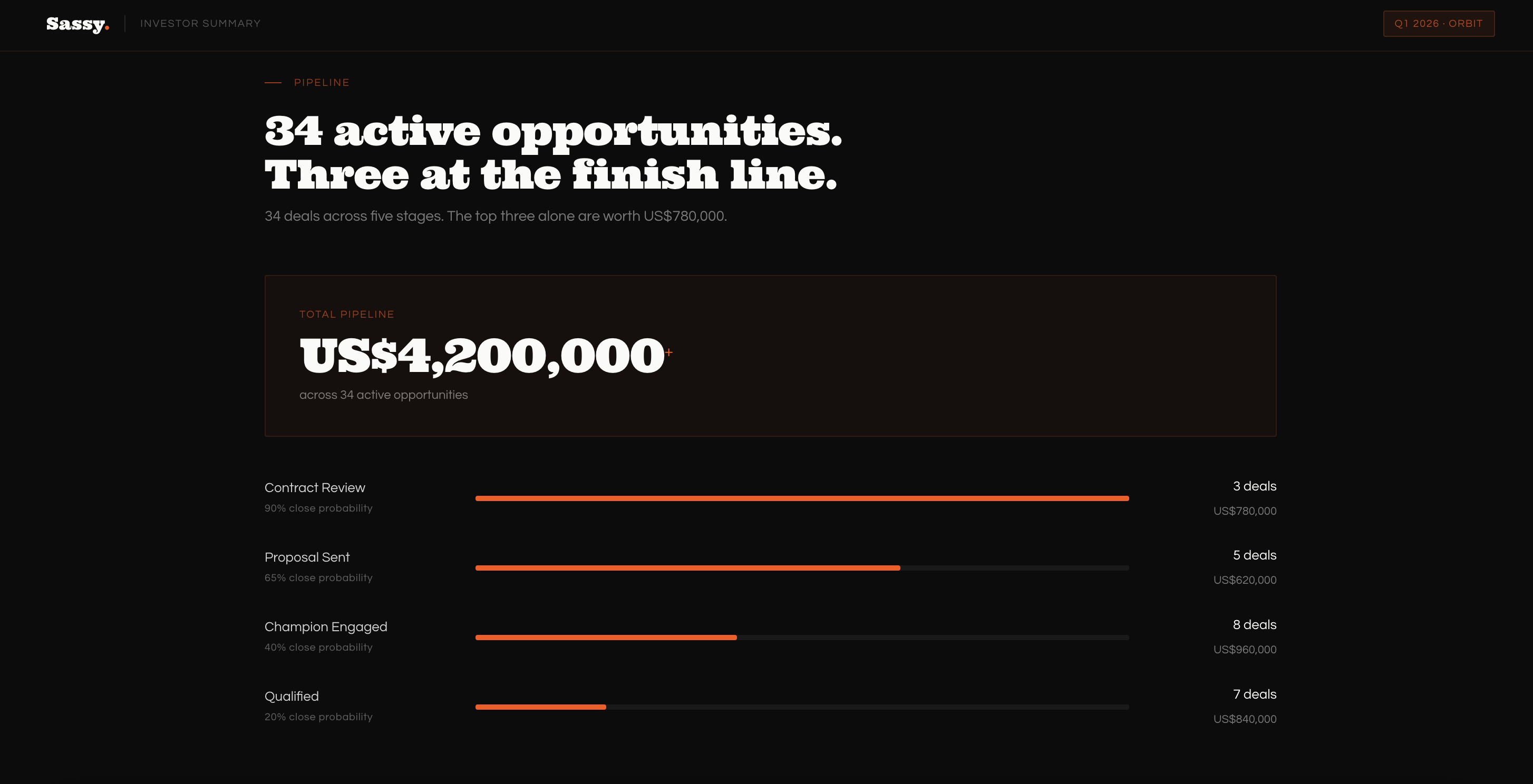
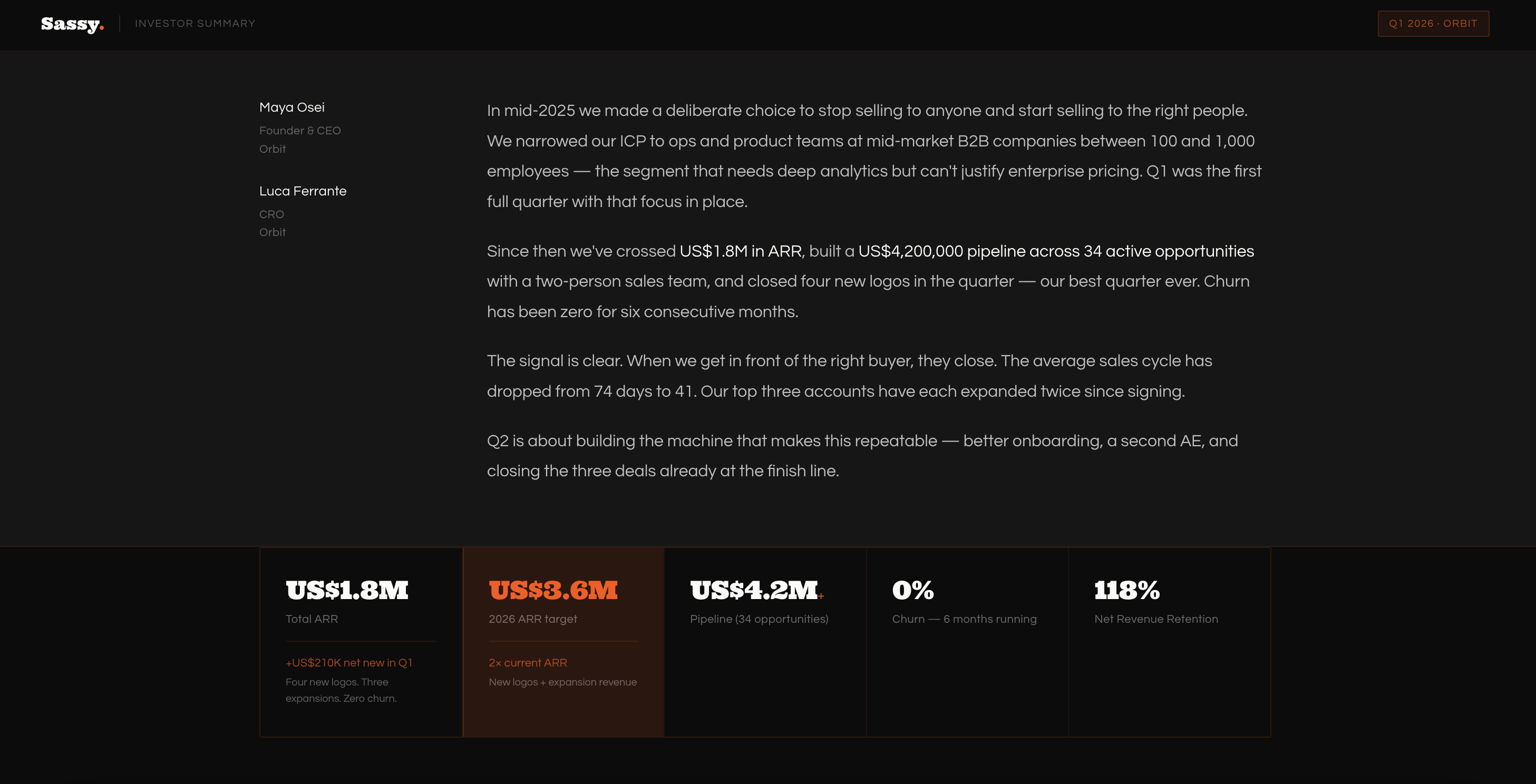
Investor updates were written from scratch each quarter — inconsistent, time-consuming, and often buried the most important signals under too much context.
- What is the narrative this quarter?
- Are the key metrics moving in the right direction?
- Where is the pipeline and what is it worth?
- What are we focused on next?
- Do investors have everything they need to stay confident?
Weekly Status Report
Two tools, one pipeline. Drop your CSVs into the generator, set the date range — the report builds itself. No formatting, no copy-paste, no manual work. The output is a polished weekly snapshot ready to share with your team and investors.
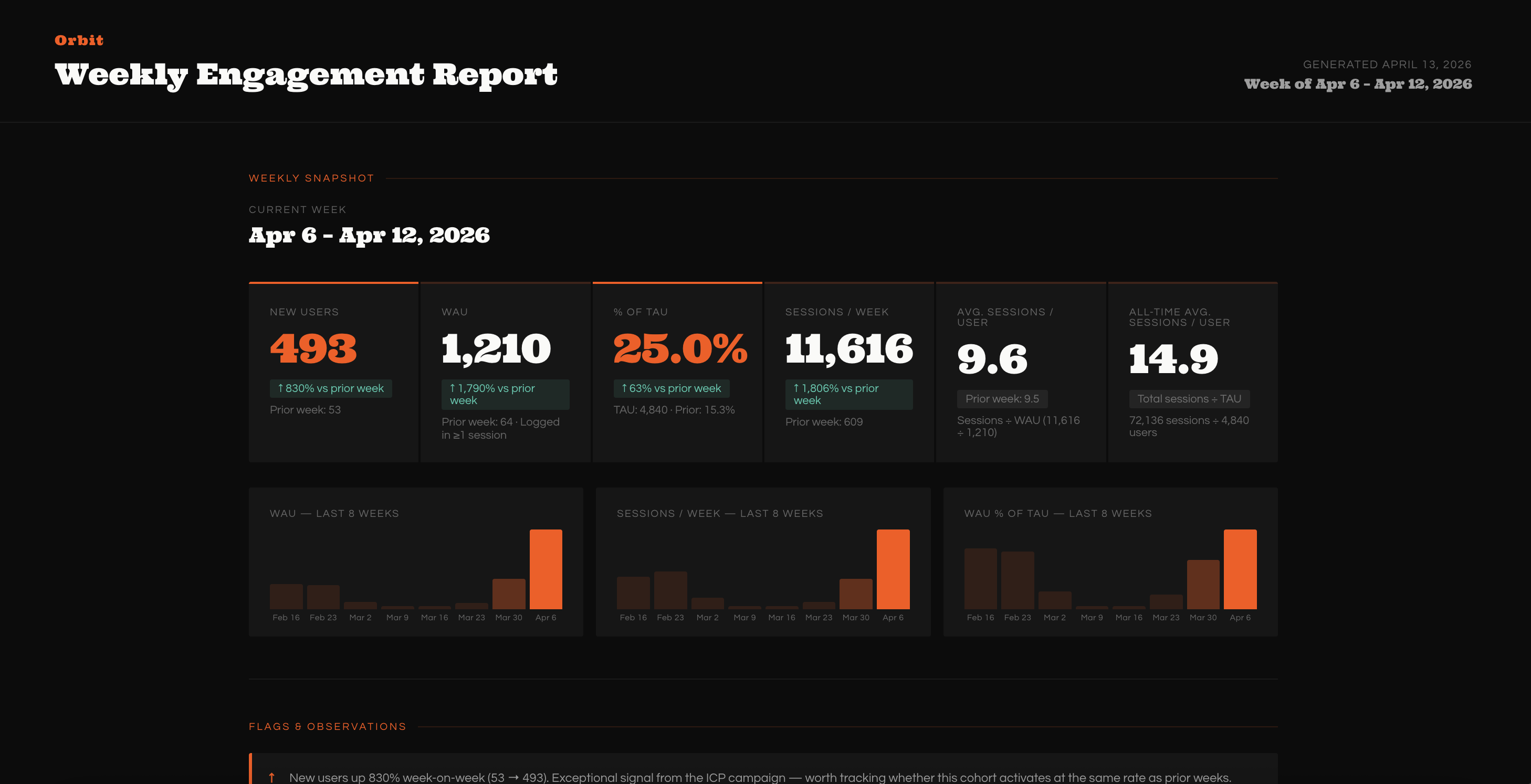
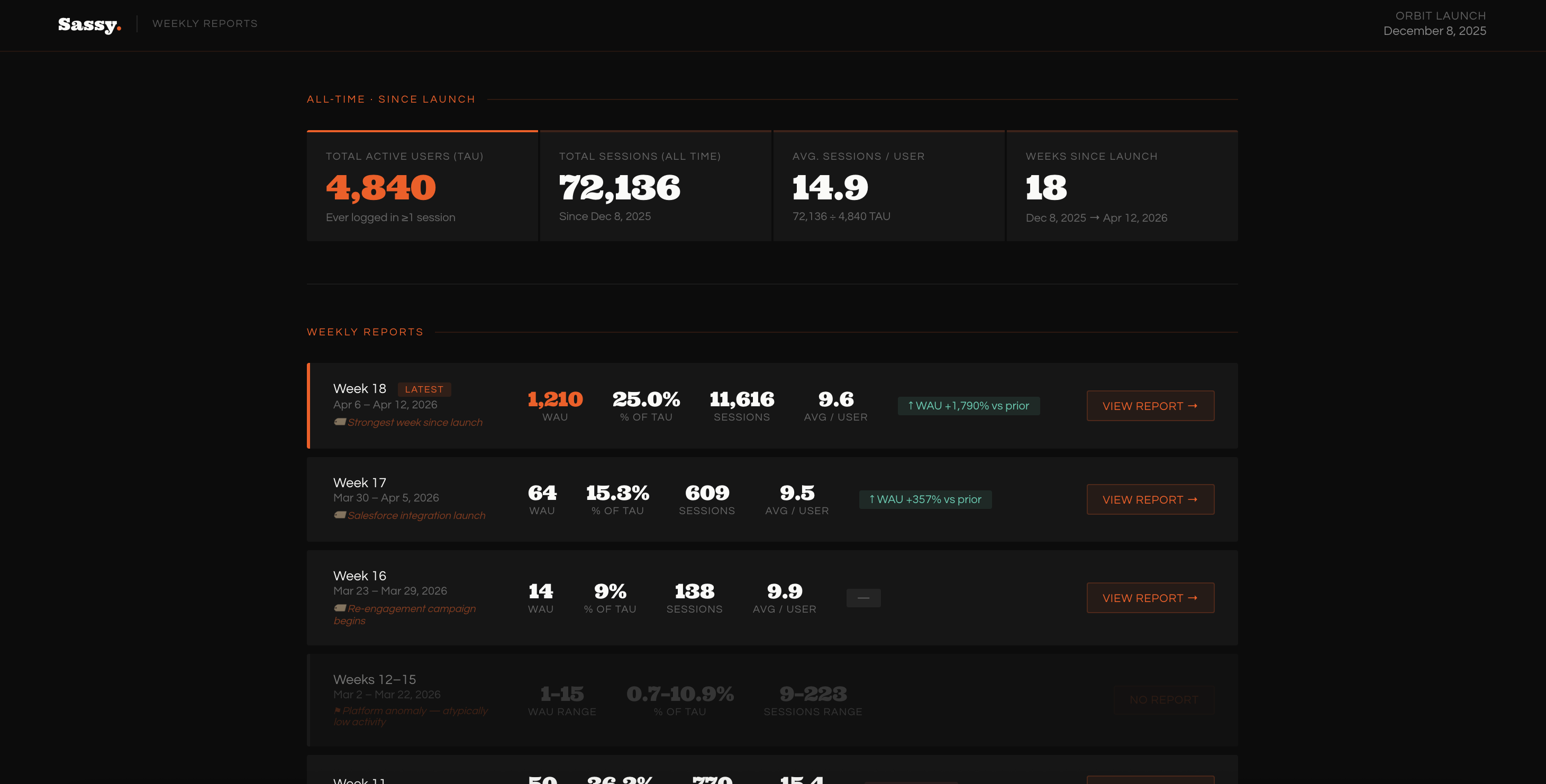
Weekly metrics were scattered across dashboards, spreadsheets, and Slack messages. There was no single place that gave the team and investors a consistent, trusted view of what was happening.
- Are we growing week on week?
- Which metrics are moving and which aren't?
- How does this week compare to the trend?
- What needs attention?
- Can we send this to investors without touching it?
Churn Intel Report
Two tools, one pipeline. Drop your CSVs into the generator, set the date range — the report builds itself. No formatting, no copy-paste, no manual work. The output is a polished weekly snapshot ready to share with your team and investors.
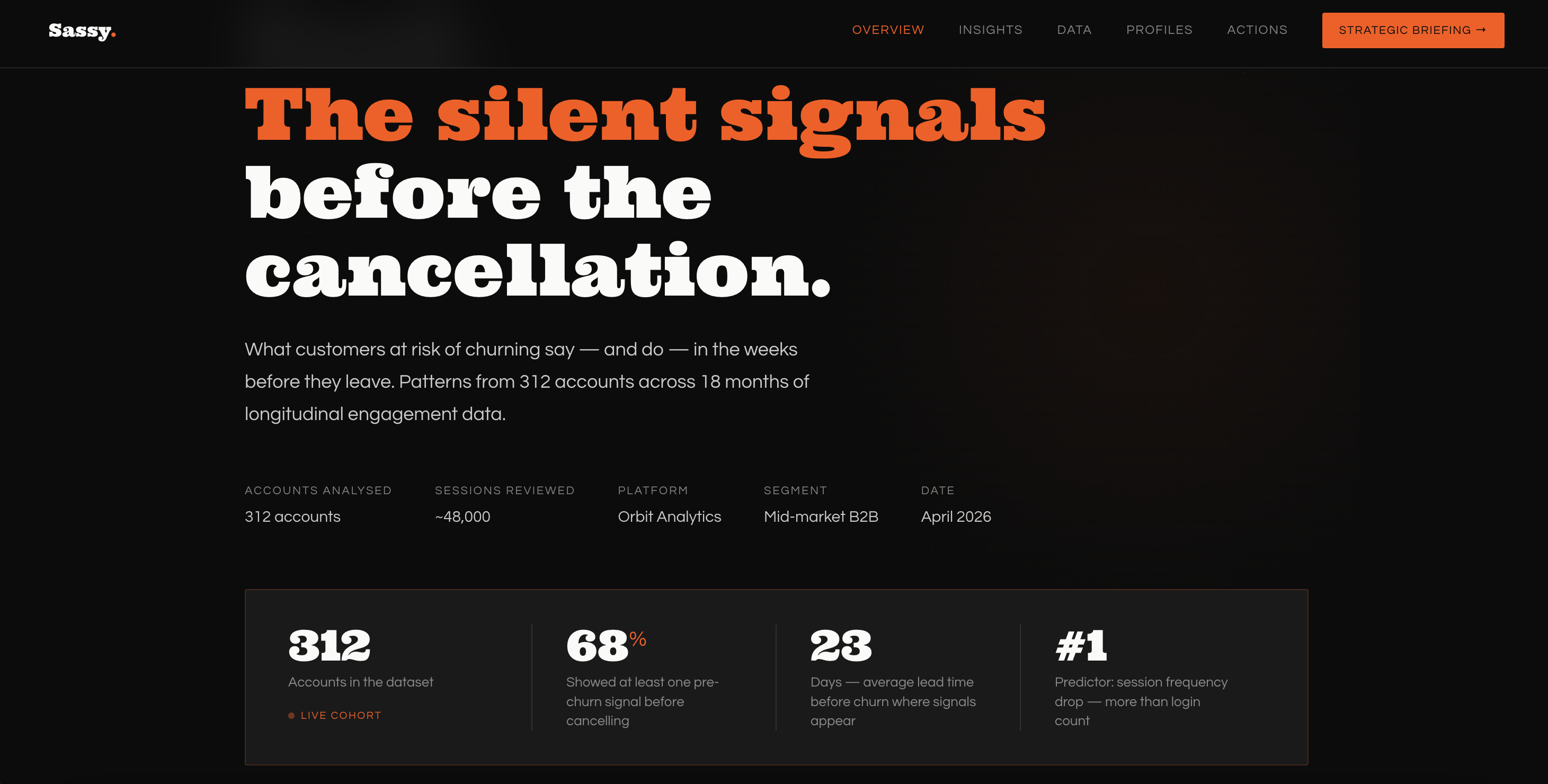
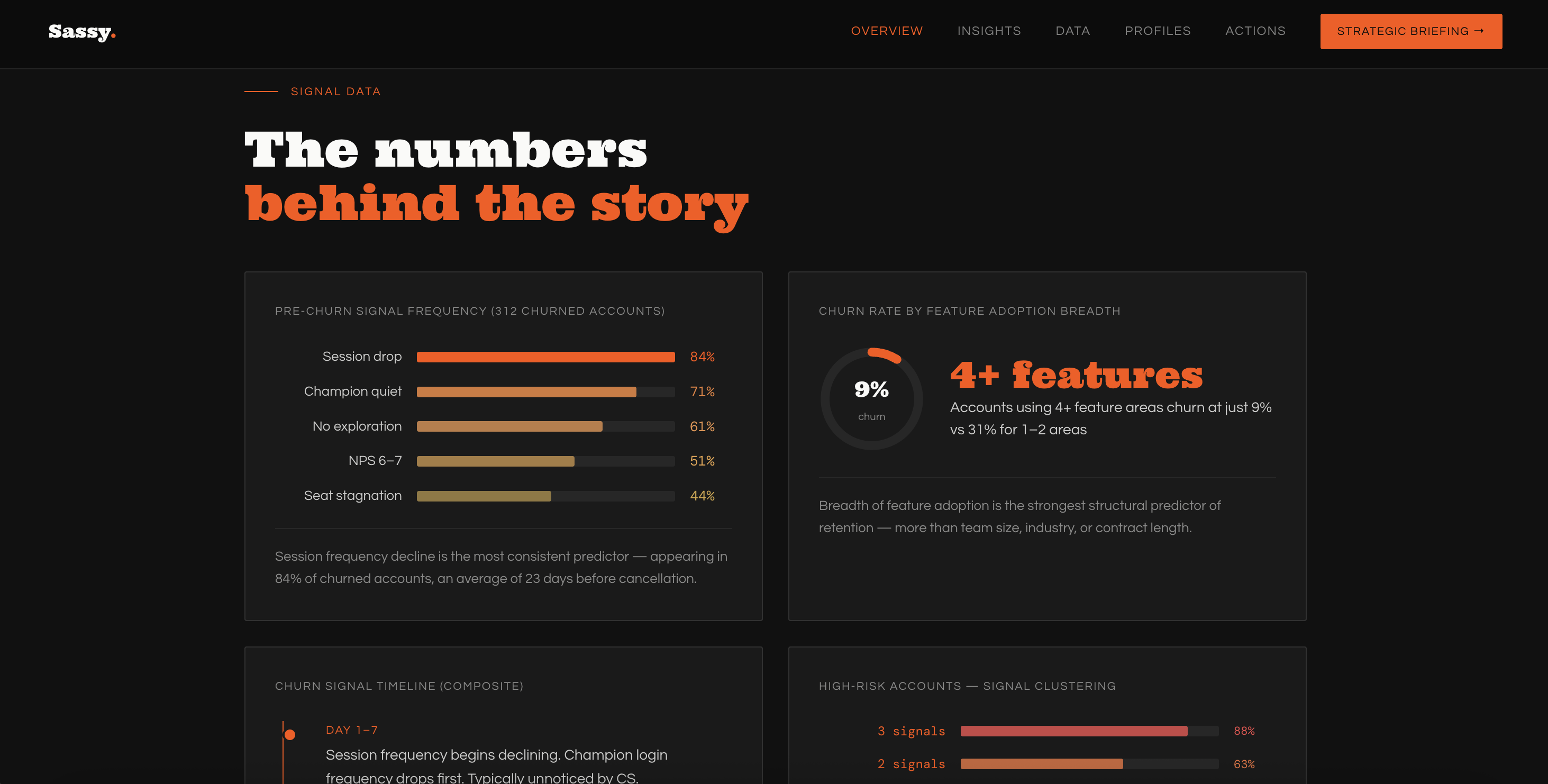
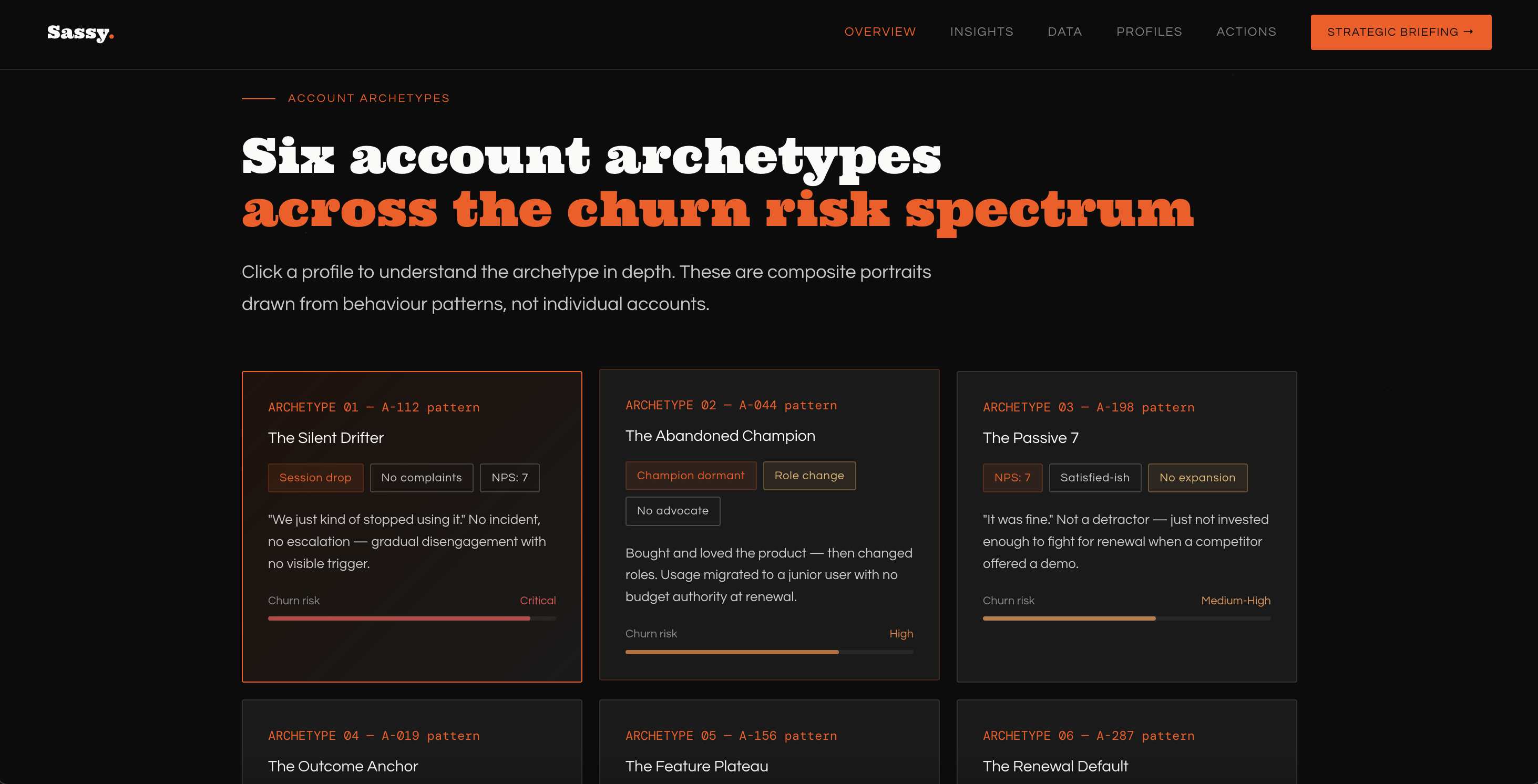
Weekly metrics were scattered across dashboards, spreadsheets, and Slack messages. There was no single place that gave the team and investors a consistent, trusted view of what was happening.
- Are we growing week on week?
- Which metrics are moving and which aren't?
- How does this week compare to the trend?
- What needs attention?
- Can we send this to investors without touching it?